





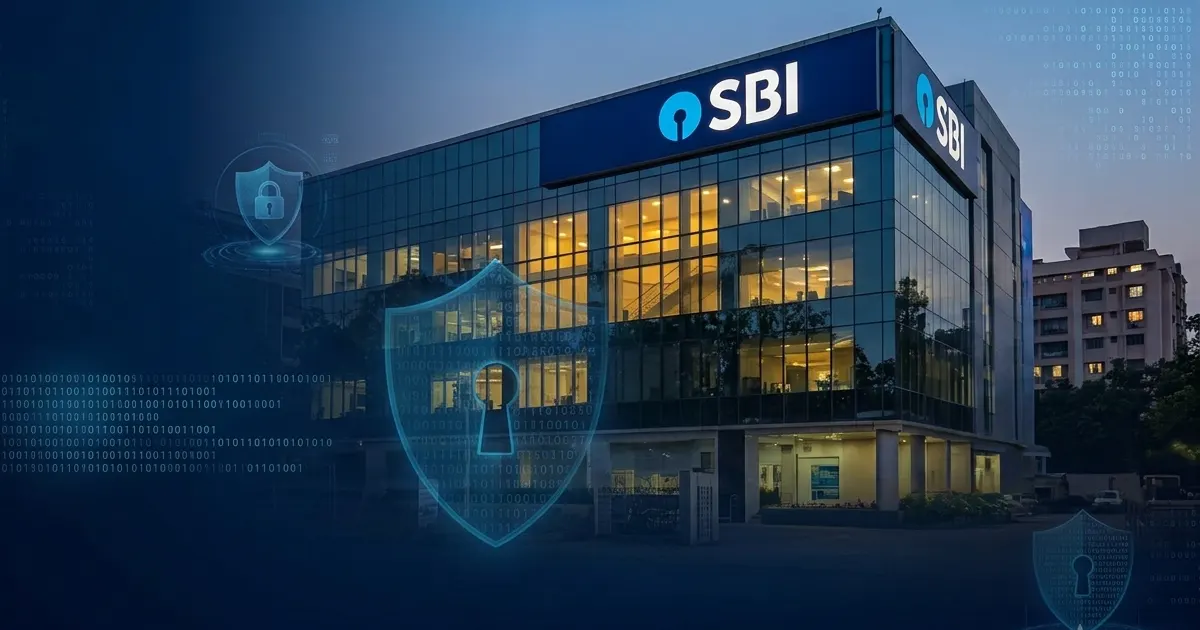
The suspected exposure of personal information at India's largest public sector bank raises concerns over customer privacy, targeted banking fraud and the need for stronger cybersecurity safeguards.
State Bank of India (SBI) is investigating a suspected data breach after identifying 3,897 customer records containing personally identifiable information (PII) among approximately 3.75 lakh records examined on the dark web. The bank has assured customers that their account balances and funds remain safe, but the incident has raised fresh questions about how sensitive banking information is protected and what happens when it becomes publicly accessible.
According to SBI's stock exchange disclosure dated October 21, the bank received alerts on October 16 from its threat intelligence service provider, the Defence Cyber Agency and the Indian Computer Emergency Response Team (CERT-In) about the suspected exposure.
The information reportedly included customers' names, registered mobile numbers, dates of birth, email addresses, residential addresses, gender, branch details, Customer Information File (CIF) identifiers, lead IDs and metadata associated with loan and lead records.
SBI activated its cyber incident response and containment protocols and appointed an independent CERT-In-empanelled cybersecurity agency to investigate the incident. The bank said the incident had no material impact on its core business operations, financial performance or business continuity.
However, the investigation is still required to establish the authenticity and completeness of the exposed data, its source and the full extent of the exposure.
Customer Notification Becomes a Key Issue
SBI's initial disclosure prompted questions about whether affected customers had been informed. On October 21, the digital-rights organisation Internet Freedom Foundation (IFF) called on the bank to notify customers directly and provide greater clarity about the incident.
Two days later, on October 23, SBI stated that it had individually informed the customers whose records were identified through email and/or WhatsApp. The bank also advised customers never to share their OTPs, PINs or passwords and to remain alert to suspicious calls, messages and emails.
The notification issue has since become part of a broader discussion about transparency and accountability in data breach response. Reporting on October 27 indicated that digital-rights organisations were seeking further information about what affected customers had been told.
The origin of the suspected exposure remains unconfirmed. SBI has not yet established publicly how the information became accessible or whether the identified records represent the complete extent of the incident.
Why Is This Concerning Even If Bank Balances Are Safe?
The exposure of personal information does not automatically mean that bank accounts have been hacked or money has been stolen. Nevertheless, such information can provide cybercriminals with material to create more convincing fraud attempts.
A scammer who knows a customer's name, mobile number, address and loan-related details could impersonate a bank representative and claim that an application needs verification or that an account requires urgent attention. Accurate personal details may make the fraudulent communication appear genuine.
This is particularly concerning because targeted phishing and social engineering rely on manipulating people into revealing confidential information or authorising actions themselves.
The available reporting does not establish that these attacks have occurred as a result of the SBI incident. However, the potential for misuse demonstrates why protecting customer data is important even when banking services continue operating normally.
Another unresolved question concerns the wider dataset. SBI's preliminary assessment identified 3,897 records containing personal information from approximately 3.75 lakh records examined. The bank's investigation will need to clarify what the remaining records contain and whether other sensitive documents were involved.
What Banks and Other Organisations Must Learn
The SBI incident serves as a warning to banks and organisations that handle large volumes of personal information. Security cannot depend solely on protecting core systems or responding after an external alert.
Organisations need to know where sensitive information is stored, who can access it and how it moves between internal systems and external service providers. Unusual database activity, bulk downloads and suspicious data transfers should be monitored and investigated promptly.
Regular security assessments, restricted access permissions, multi-factor authentication, third-party security reviews and tested incident-response procedures can help reduce exposure risks.
Equally important is the response after an incident. Organisations should establish clear processes for determining what information was affected, containing further exposure, preserving evidence and communicating practical advice to customers.
India's Digital Personal Data Protection Act, 2023, and the Digital Personal Data Protection Rules, 2025, form part of the evolving regulatory landscape. The commencement of specific provisions is phased, and organisations should verify which requirements apply at the relevant time.
What Should Customers Do Now?
SBI customers should remain vigilant without assuming that their accounts have been compromised.
- Never disclose OTPs, PINs or passwords to callers or through unverified links.
- Verify unexpected banking requests through the bank's official channels.
- Be cautious of calls or messages that use accurate personal details to create urgency.
- Report suspicious transactions or suspected fraud to the bank immediately.
- Avoid downloading applications or granting device access at the request of unsolicited callers.
Customers should remember that knowing personal information does not prove that a caller genuinely represents their bank.
The Bigger Warning: Data Security Is Banking Security
The SBI incident highlights a critical distinction: keeping financial operations running is not the same as ensuring that customer information remains confidential.
Although the bank has said its customers' funds are safe and that affected customers have been informed, the source and full extent of the suspected exposure remain matters for investigation.
The findings will be important in determining how the incident occurred and what additional safeguards may be necessary. For the wider banking sector, the case reinforces the importance of effective threat detection, responsible data handling and timely communication when customer information may be at risk.
For customers, the message is equally clear: remain alert to targeted scams, verify unexpected requests and never allow a caller's knowledge of personal details to replace independent verification.

Read Other Breaking News
Read All Breaking News »
Hackers Drain ₹48 Crore Overnight: The Cyber Heist That Shook India's Finance Sector
Read Details »
Himachal Government website hacked: Fake Relief Fund Page Exposes Critical Cybersecurity Lessons
Read Details »
Huge Data Breach from LinkedIn Phishing for Job-cravers!!!
Read Details »
Medusa Partnered with Flubot to Attack Android Users
Read Details »
Cybercrime Worth Rs 5 Crores - 12th Passed Student Caught
Read Details »
Ransom Attack On Bose: Employee Data Leaked
Read Details »
Ransom Attack On Us Largest Pipeline System: Hackers Got Usd 5 Million
Read Details »
Beware! Whatsapp Pink Is A Virus!
Read Details »Exclusive Blog
Read All Exclusive Blog »
With world working from home, it's time to make it enjoyable and effective.
Read DetailsHacking Tools
Explore All Hacking Tools »
UFTP is an encrypted multicast file transfer program for secure, reliable & efficient transfer of files. It also helps in data distribution over a satellite link.
Read Details