





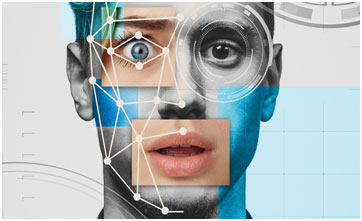
 Deepfakes, or fake films and images that are so realistic that they can trick even the most perceptive viewers, are all the rage on the internet these days. Deepfakes are a severe threat to our digital world, putting politicians in awkward positions and celebrities in embarrassing situations. But the battle is far from ended! Artificial intelligence-driven deepfake detection systems are intervening, employing state-of-the-art technology to shield us against online fraud.
Let's examine some of the best techniques available for detecting deepfakes, their workings, practical uses, and prospects for the future of each.
1. Deepfake Detector by Meta AI
The Deepfake Detector is a potent deepfake detecting tool created by Meta AI, formerly known as Facebook. This AI-powered application uses a machine-learning model that has been extensively trained on actual and fraudulent content across large datasets. The main advantage of Meta's program is its accuracy; even with the most sophisticated algorithms, it can identify minute discrepancies in deepfake films.
 Usage: It is used by social media companies to stop the spread of misleading content. Meta's Deepfake Detector identifies and removes deepfakes from user-uploaded videos. This is done before the videos have views from more people.
- Future: Meta is committed to improving its detection algorithms in the ongoing development of deepfake technology. The Deepfake Detector will be further integrated into platforms in the future and will automatically remove deepfake content in real time.
- Impact on Industry: Meta's tool has managed to bring about a great decrease in false information on social media, and it will help with the fight against internet misinformation.
2. Sensity AI
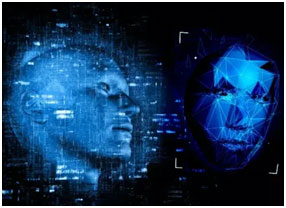
Another pioneer in the deepfake detection space, Sensity AI is renowned for its capacity to examine both pictures and movies. The platform employs sophisticated artificial intelligence (AI) detection techniques to recognize the telltale indicators of deepfakes, such as irregularities in lighting and shadows or abnormal face movements.
 Usage: The technology from Sensity AI is of importance to companies and media organizations. Businesses can keep their content safe from being tampered with or misused by integrating Sensity's API into their systems.
- Future: Sensity AI focuses on developing more accurate detection approaches to catching up with deepfakes, which are becoming more complicated because of the pace at which AI is advancing. In the future, Sensity may well evolve into a standard tool for industries such as advertising and entertainment, heavily dependent on video content.
- Impact on Industry: Sensitivity AI has made a considerable contribution to protecting corporate reputations. It will be important to help businesses to preserve the authenticity of their digital assets with the spread of deepfakes.
3. Deepware
Deepware uses machine learning methods to provide enhanced deepfake detection capabilities. It is unique in that it can identify deepfakes in a variety of file types, including social media videos and private images.
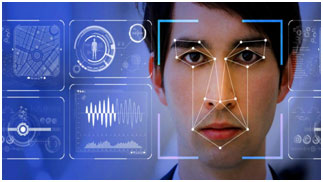 Usage: The program developed by Deepware is used by governments, companies, and individuals to spot deepfakes. It is made available for non-expert users because of its intuitive appearance that allows any individual to upload a video for which the system instantly provides analysis.
- Future: Deepware seems to have a lot going for it as it works on getting better at detecting. One of their major goals is developing a fully automated system capable of identifying deepfakes at scale and assisting large corporations in enhancing their defence against cyber-attacks.
- Impact on Industry: Deepware is widely used in many areas as it has a broad application. The number of its adherents will only grow with the number of people seeking reliable detection methods and being enlightened about the threats of deepfakes.
4. Reality Defender
Google's Reality Defender employs a novel method of detecting deepfakes by examining the regularity of eye movements in films. Eye movements in deepfakes frequently appear abnormal, according to research, making this a crucial clue for identification.
 Usage: Reality Defender comes in handy when the truth of video evidence is critical in high-stakes scenarios like political campaigns or court cases. It does so by being able to spot a fake video through the analysis of eye movements and providing an in-depth examination.
- Future: Reality Defender is focusing on widening its detecting realms apart from eye movements with deepfakes becoming more sophisticated. The tool might in the future integrate more biometric cues to speech patterns and facial expressions for better accuracy.
- Impact on Industry: With an emphasis on high-precision detection, the Reality Defender is of use to sectors where authenticity is key. As business after business comes to realize how important it is to protect their digital content, its relevance can only grow.
5. Deepfake Forensics
Using a variety of methodologies to conduct in-depth analysis, Deepfake Forensics provides a complete approach to deepfake identification. This program, which combines conventional forensic techniques with AI-powered algorithms, is among the most comprehensive available.
 Usage: The police, forensic specialists, and cybercrime investigators use Deepfake Forensics to analyze digital evidence for possible alterations. This can be relied on in investigative and legal environments due to the detailed reports.
- Future: Deeper AI techniques are what will define the future of Deepfake Forensics. It will also get better at detecting deepfakes that could escape other detectors through the use of deep learning and neural networks.
- Impact on Industry: Deepfake Forensics has made a big difference in the legal and cybersecurity sectors. As long as deepfakes are a threat, this tool is going to be very important in making sure that justice is done and digital evidence is trustworthy.
The Future of Deepfake Detection: What's Next?
The tools to uncover deepfakes also need to advance with deepfake technology. Leading the forefront of this battle are AI-based solutions such as Sensity AI, Deepware, Reality Defender, Meta AI's Deepfake Detector, and Deepfake Forensics which have superpowers in protecting individuals, companies, and industries from the threats of digital deception. These tools are definitely going to evolve further in the future and become essential in maintaining the cleanliness of our digital ecosystem. Although the war against deepfakes is far from being over, we are better than ever prepared to meet our distress thanks to those cutting-edge AI solutions.

Read Other Articles
Read All Articles »
Quick look at the 10 facts you need to know about the latest Facebook hack
Read Details »
Top certifications in cyber security industry
Read Details »
Building a career in IoT: A thorough guide
Read Details »
The mystery of UIDAI : Who & Why!! Is it a threat? A detailed discussion
Read Details »
Top 5 cyber security jobs in the age of Cyber Disruption
Read Details »
Top Cyber Security trends of 2018
Read Details »
A severe vulnerability in Signal desktop app allowing hackers to steal chats in plaintext without any user interaction
Read Details »
Cambridge Analytica and Facebook Controversy: What happened so far?
Read Details »
Equifax identifies an additional 2.4 million U.S. consumers affected by the massive data breach of 2017
Read Details »
Severe flaw in µTorrent can let hackers to control your PC remotely
Read Details »
Cyber Criminals are turning into Cryptominers, Dominating Cyber Threat Landscape
Read Details »
Android Banking Trojan targets over 232 banking apps, including Indian banks
Read Details »
Private end-to-end encrypted Whatsapp group chats are not secured anymore!
Read Details »
Top Cyber Attacks In 2017
Read Details »Hacking Tools
Explore All Hacking Tools »
UFTP is an encrypted multicast file transfer program for secure, reliable & efficient transfer of files. It also helps in data distribution over a satellite link.
Read DetailsBreaking News
Breaking News Of Each Month »
The recent pandemic was unexpected and unknown to most part of the world. It has changed our life and we are slowly adapting to our new lifestyle. The risks associated with the new lifestyle, both personal & corporate, are unknown to most of us.
Read Details